Village Artisans in the Digital Era: The Revival of Lippan Art and Madhubani Handmade Crafts
Blog Date: 29 Aug, 2025
India’s rich heritage of handcrafted products is more than art—it is the story of communities, culture, and creativity. Today, village artisans are finding innovative ways to preserve their traditions while adapting to the digital era. Through social media, e-commerce platforms, and eco-conscious marketplaces, traditional crafts are reaching new audiences worldwide. From the mirrored mud reliefs of Gujarat’s Lippan art to the vibrant motifs of Madhubani paintings, these artisan creations are thriving as handmade home décor and handcrafted gifts for modern lifestyles.
Lippan Art: Mirrored Mud Reliefs from Kutch
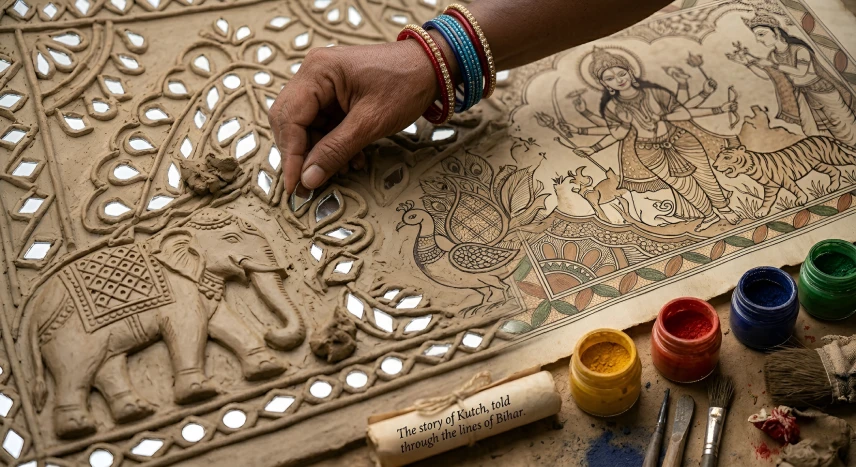
Originating in the Kutch region of Gujarat, Lippan art is a centuries-old craft where artisans create intricate designs on mud walls using a mixture of clay and camel dung, enhanced with mirrored embellishments. Traditionally, these designs told stories of nomadic life, celebrating rituals, festivals, and everyday experiences. Today, Lippan art has evolved into a form of eco-friendly handmade décor, with designs applied to wall panels, coasters, and furniture for homes around the world. By embracing digital platforms, Kutch artisans are now selling handcrafted wall art and décor online, bringing sustainable Indian handicrafts to a global audience.
Madhubani Paintings: Empowering Women Artists
Another powerful example of Indian artisan resilience is Madhubani art, also known as Mithila painting. Originating from Bihar, these colorful, hand-painted artworks were traditionally created on mud walls to depict mythological stories and daily life. Over time, Madhubani painting has transitioned to paper, canvas, and textiles, creating new income opportunities, especially for women artists. Today, Madhubani paintings are highly sought-after as handmade wall art, handcrafted gifts, and artisan home décor items worldwide. The evolution of Madhubani art highlights how traditional Indian crafts can adapt to modern markets without losing cultural authenticity.
The Role of Digital Platforms in Preserving Crafts
Digital marketplaces and online stores have become lifelines for village artisans. Selling handcrafted products online not only increases visibility but also provides sustainable income for artisan communities. Platforms that highlight the story behind each craft—its origin, techniques, and cultural significance—help buyers connect emotionally to their purchase. For artisans, this shift ensures that traditional crafts like Lippan art and Madhubani paintings are not only preserved but also appreciated as globally relevant handmade décor and artisan products.
Sustainability Meets Tradition
A growing number of consumers prefer eco-friendly handmade décor and products made with natural, sustainable materials. Crafts such as Lippan art use mud, clay, and mirrors, while Madhubani paintings rely on natural dyes and handmade paper. By choosing handmade gifts or handcrafted home décor, buyers are not just acquiring a unique product—they are supporting sustainable craftsmanship and helping artisans preserve their centuries-old traditions.
Celebrating the Spirit of Village Artisans
The perseverance of India’s village artisans is a testament to creativity, resilience, and adaptability. By embracing modern tools and global markets, artisans are giving traditional crafts a new lease on life. From Gujarat’s mirrored mud reliefs to Bihar’s vibrant Madhubani paintings, handcrafted products continue to inspire, empower communities, and enrich homes with authentic cultural beauty. Supporting these artisans ensures that India’s rich craft legacy remains alive for generations to come.